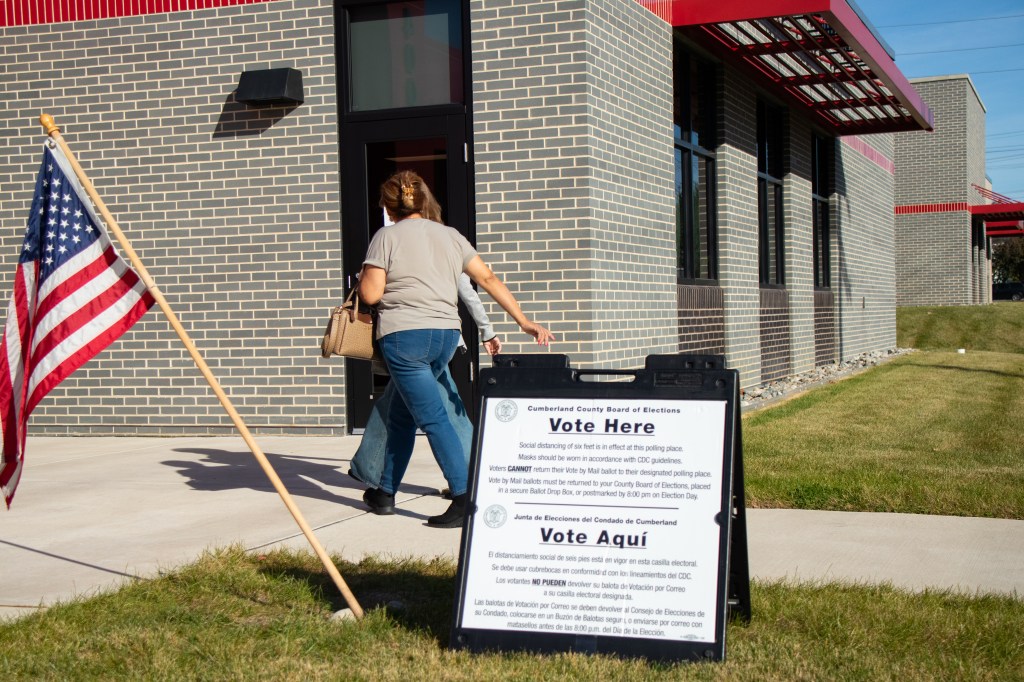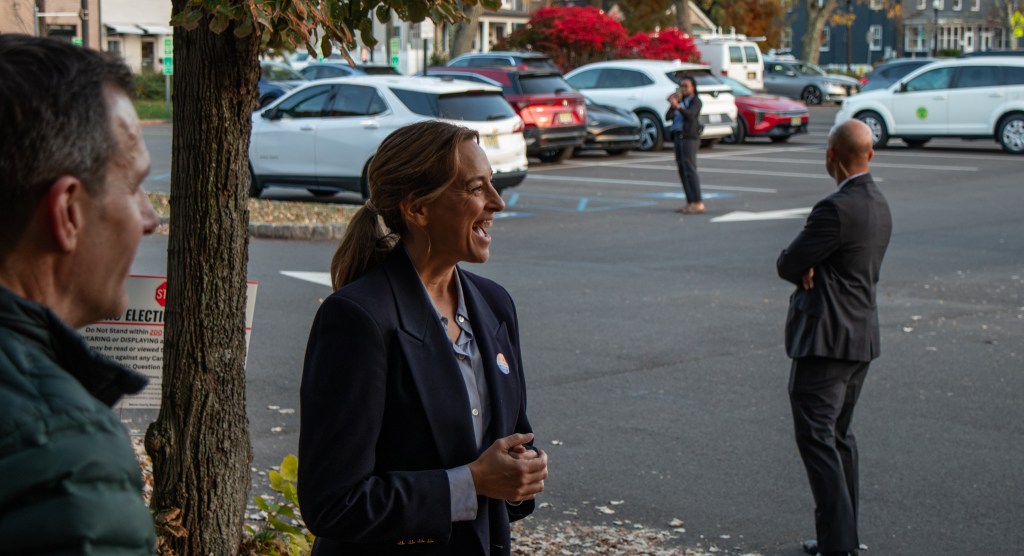
Photo credit: Denise Chan via Unsplash
By Jayden Parente
NJ State House News Service
TRENTON, N.J. – Booming prediction markets are facing significant scrutiny from the states, where legislators are eyeing local regulation, issues of morality and lost state revenue.
Lawmakers in 14 states, including New Jersey, have proposed 50 bills centered on regulating wagering apps like Kalshi and Polymarket, popular sites that let users bet against each other on anything from the Rotten Tomatoes score of an unreleased movie, or whether or not Anthony Fauci will be arrested.
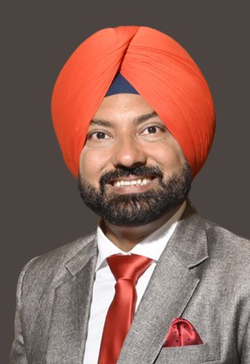
“Certain markets, I don’t believe, that New Jersey’s values align with what they’re selling,” said New Jersey Assembly Member Balvir Singh, a Democrat from Burlington.
Singh is particularly troubled by wagers placed on assassinations, catastrophes and elections. His bill, A4689, would bar betting on death markets, war and terrorism, natural disasters, mass shootings or politics and require prediction markets to acquire a New Jersey license for sports gambling.
The controversy has its roots in New Jersey. Gambling has been legal in casinos in Atlantic City for nearly 50 years, and in 2011 voters statewide approved adding sports betting by a nearly two-to-one margin. The problem: was it legal for the state to deliver sports wagering?
The NCAA and professional sports leagues like the NFL and NBA sued New Jersey the following year, claiming that the law violated federal law and endangered the integrity of their games. In 2018, the U.S. Supreme Court ruled against the leagues and effectively legalized sports betting nationwide.
Today 40 states allow sports wagering, and the American Gaming Association estimated revenues at nearly $17 billion in 2025.It also paved the way for prediction markets.
This fall, New Jersey Attorney General Jennifer Davenport asked the high court to determine whether prediction markets must follow state gambling laws, after conflicting appellate court rulings on the volatile issue. Ultimately, a bipartisan coalition of states urged the U.S. Supreme Court to rule in favor of New Jersey, including Ohio, Missouri, 37 other states and the District of Columbia.
Across the nation, lawmakers like Singh believe prediction markets are stepping on states’ toes in most aspects of governing. From taxes and consumer availability to morality, the role of the states to regulate and tax prediction markets is deeply contested. Singh, who introduced his bill in March, believes that the Supreme Court’s prior rulings give the state authority to oversee prediction markets.
“The prediction markets right now are really kind of infringing upon on what is really a states right. What the bill is saying is that we understand the federal supremacy clause, but gambling, sports betting, is a state’s space,” Singh said.
Major players in the industry, however, disagree.
“Polymarket US maintains that prediction markets are regulated by the Commodity Futures Trading Commission under a federal framework, not a patchwork of state rules,” Polymarket argued in a written statement.
Another bill introduced in New Jersey, A5336, would charge a 9% surtax on income generated by prediction markets. In Ohio, lawmakers have introduced legislation to prevent public officials and employees from engaging with prediction markets.
A law passing through committee in California proposes that the Attorney General investigate any payout of $5,000 or more. A law enacted in Tennessee makes it a felony to intentionally manipulate the outcome of an event in order to profit from a prediction market.
Insider trading
Another issue that states are wary of is insider trading, after high-profile national incidents.
In August, a White House teleprompter operator was ordered to pay a $172,000 fine for placing Kalshi bets on President Donald Trump’s speeches. In April, an U.S. Army officer was charged with placing Polymarket bets using classified information in advance of a military operation that captured Venezuelan President Nicolás Maduro
In April, only three months later, the Senate voted unanimously to prevent their members from participating in prediction markets, but the states do not have such a clear cut answer.
In Ohio, Rep. Sean Brennan introduced House Bill 887 in May. It seeks to prohibit public employees and officials from participating in prediction markets. This would prevent someone in a government position from using their influence and access to non-public information to make money through prediction markets, Democratic Rep. Erika White, a cosponsor of the bill, explained.
“We don’t want to see public service become an opportunity to monetize privileged information,” she said.
Prohibitions against prediction market wagering would apply to elected or appointed officials across all levels of government in Ohio.
“Public trust, consumer protection, fairness and accountability are things that aren’t just for the federal [government],” White said. “We’re just saying, whether it is future prediction markets that are evolving quickly, the responsibility is the same: protect the public, protect consumers and protect trust in the government.”
Taxes and underage betting
Missouri Attorney General Catherine Hanaway issued cease-and-desist orders against six prediction market operators for unlicensed, untaxed sports betting.
Hanaway wrote to Polymarket, Kalshi, Crypto.com, Novig, Underdog and Robinhood that they must either stop providing sports betting, or they must pay all fees and taxes and stop allowing people under 21 to participate in sports betting.
In most U.S. states like New Jersey, 21 is the minimum age to participate in casino gambling or online sports betting, but in most states Kalshi and Polymarket require users to be just 18 in order to sign up.
One of the main issues, according to Hanaway, is that these markets do not require the “robust age verification” that is required under the state’s sports betting law.
In 2024, 50.05% of Missourians voted to legalize sports betting. However, Hanaway said the prediction market operators are designating some sporting events as event contracts to bypass the state’s sports betting laws.
Hanaway said prediction market operators are not paying the taxes and fees required of sports betting agencies in Missouri.
Legal sportsbooks in Missouri are required to pay 10% of the total wagers in taxes, which go toward the education system and the Compulsive Gambling Prevention Fund. Additionally, there is a $500,000 licensing fee for sportsbooks.
Prediction market operators hold that they fall under the designation of federally regulated event contracts rather than sports betting.
Some states have an entirely unique set of issues.
Georgia prohibits sports betting, but key prediction platforms, such as Kalshi, FanDuel Predicts, DraftKings, and Polymarket are operating in the state. During the last legislative session, Georgia lawmakers introduced four bills and resolutions to regulate the industry with an eye on generating revenue and providing safeguards for minors. All have failed.
Lobbying groups have been trying, unsuccessfully, to convince lawmakers to vote yes on bills opening the doors to the prediction market.
One proposal, coined as the Georgia Sports Betting Act, would amend the Georgia Constitution to regulate and tax sports betting, channeling tax revenue into a yet-to-be-established Georgia Sports Betting Proceeds Trust Fund with authority to allocate money for purposes like resources to treat gambling addiction. The resolution failed to pass in April 2026.
Much like the amendment enacted in 1991 that designated lottery revenue to be used for educational purposes and scholarships, the bill was an attempt to generate revenue for education. Yet legislators, during a March debate, questioned whether funds from sports betting would reach those most in need.
“Have we thought about fully funding school meals with some of the funds if we’re bringing in so much from sports betting?” Democratic Rep. Imani Barnes asked.
Another proposal was sponsored by Georgia lawmakers less concerned with funding education, but with regulating sports betting in an effort to generate tax revenue. Legislators suggested licensing online betting platforms through eligible entities like sports teams and venues and the Georgia Lottery Corporation. With this bill, a 25% tax would serve to accumulate funds dedicated to education.
“What good comes of gambling or any other voluntary tax,” Republican Sen. Frank Ginn wrote in response to a Grady Newsource interview request. He added: “I have been told: ‘Don’t bet on it passing yet.’” Ginn, who has voted against an expansion of gambling, saying it would invite illegal activity, in 2024 served on a committee that recommended legalization.
Another Georgia proposal, which would require strict age verification requirements, died in committee earlier this year.
While the battle over Georgia’s laws around sports gambling has been waging since 2018, no legislation has been advanced to address prediction markets. Constituents can expect renewed efforts when the Georgia legislature reconvenes in January 2027.
Prediction markets push back
In the courts and state house lobbying efforts, prediction gambling platforms promote the framework that online gambling is a federal issue, not a state one, because they operate nationally.
Polymarket is one of the largest online gambling platforms and claims to be the “The World’s Largest Prediction Market” on their website. Kalshi, one of the other largest prediction markets did not respond to our requests for comment, but have given statements in the past regarding the legislation:
“Kalshi is an open, nationwide financial exchange. It cannot be regulated by 50 different regulators,” said Kalshi spokesperson Dani Lever, as reported by the New Jersey Monitor.
The U.S. Supreme Court has not yet decided whether it will hear the case Mary Jo Flaherty, Interim Director, New Jersey Division of Gaming Enforcement v. Kalshi, but legal battle lines are being drawn. In addition to the bipartisan coalition of states, an alliance of 145 Indian tribes, the NFL, the International Association of Gaming Regulators, the Casino Association of New Jersey and a national nonprofit, “Stop Predatory Gambling,” all have filed legal briefs urging the high court to rule in the case.
This article was produced through the Statehouse Reporting Project, a collaborative effort by collegiate journalism programs across the country. The lead reporter was Jayden Parente of Rowan University. Contributors were Amelia Wysong from Kent State University; Hailey Sanford from the University of Missouri; and Jessica Johnson, Eunice Gani, Grace Smith and Austin Lathrop from the University of Georgia.
Jayden Parente is a journalism student at Rowan University with a concentration in writing.