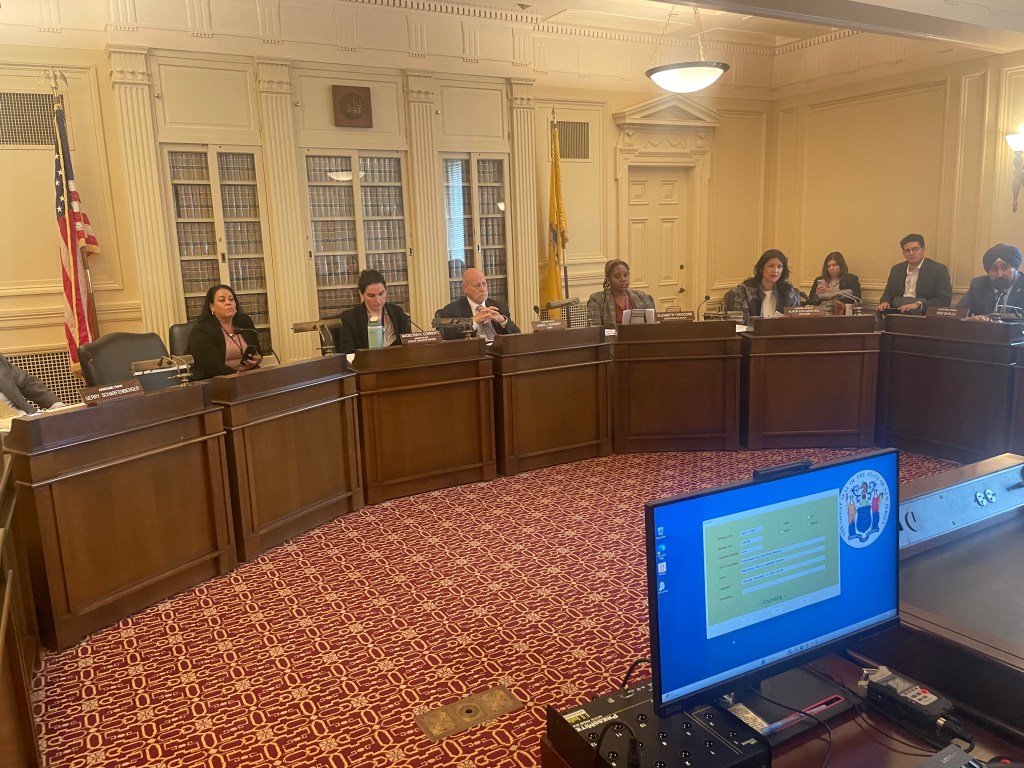
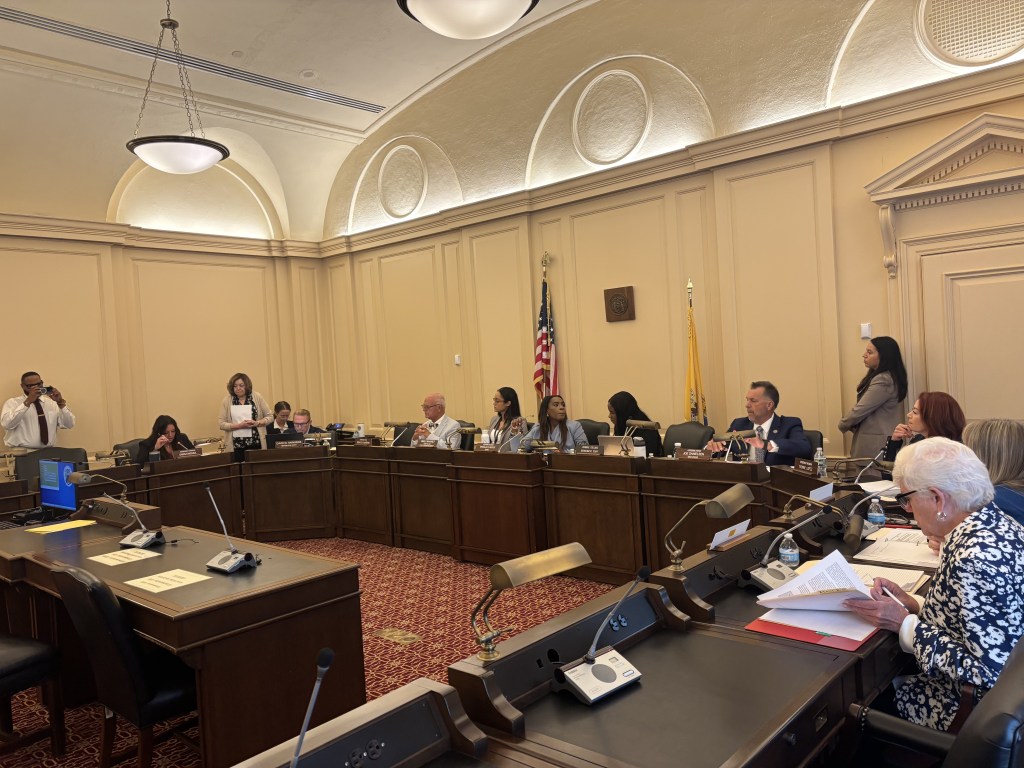
The Environmental and Solid Waste Committee gathers to vote on a measure prohibiting the spending of Green Acres funds for the purchase, use, installation or replacement of artificial turf fields. Photo Credit: Zo Terrana/ NJ State House News Service.
By Zo Terrana
NJ State House News Service
TRENTON, N.J. – The Environmental and Solid Waste Committee unanimously voted to move a measure that would prohibit using Green Acres funds for artificial turf.
The bill prohibits the spending of Green Acres grants or loans for the purchase, use, installation or replacement of artificial turf fields.
“It’s a big conversation that we need to have in New Jersey regarding, not just turf fields, but how are we using public funds to fund projects like this one,” bill sponsor Assembly Member Alixon Collazos-Gill, a Democrat from Montclair, said. “So artificial turf served its purpose and still does. But now that we understand the kind of damage that it has and its problems, they need to do better.”
The Green Acres Program, administered by the New Jersey Department of Environmental Protection, aims to preserve open space and support recreational opportunities.
Artificial turf fields, according to A4908, are dangerous due to the pellets used in the turf, which can be harmful for humans.
Taylor McFarland, a representative from the Sierra Club’s New Jersey chapter, testified in favor of the bill.
“This legislation is essential to protect our environment and public health, and to ensure the … funds are strictly dedicated to conservation and safe recreation,” McFarland said. “Currently, state tax dollars intended for conservation are instead subsidizing toxic, plastic, artificial turf fields. In recent years, the Green Acres program has spent millions in public funding on these artificial turf fields, including $10 million in 2023, and another $4 million in 2025. The environmental and human health costs of artificial turf are staggering.”
“A single artificial turf field contains about 40,000 pounds of plastic. That’s equivalent to 24 million plastic straws or 2.4 million plastic water bottles,” McFarland said, adding that the claim that turf is environmentally-friendly because it eliminates pesticides is misleading.
“Taxpayer money, Green Acres, is being sent to artificial turf manufacturing corporations in Georgia,” McFarland said. “But if we invest in natural grass, we invest in New Jersey farms.”
But Dennis Hart, a lobbyist for a turf manufacturing company, testified in opposition to the bill.
“I think there’s a fundamental misunderstanding of the projects being funded and encouraged by the Green Acres program,” Hart said. “Since 2016, the program has funded 27 projects that have been completed, and a lot of these projects are multiple projects. There might be three parks within one county park system that they funded for one project. Twenty-one projects are under development.”
Hart said all these projects funded by the Green Acres Program include artificial turf.
Hart said the state doesn’t have enough space for natural grass fields, and that schools and parks should have a choice of what kind of field they want.
In an interview, Hart said the Green Acres Project helps fund not only athletic fields but other projects like bocce courts, playgrounds and tennis courts. Without the funding these projects won’t happen.
Hart said supporters of the measure are “concerned about environmental impact, but they don’t want synthetic turf, no matter what, whether it’s zero environmental impact, they just don’t want it. So, the problem is, local communities all over the state, particularly in our overburdened urban communities, are just not going to have access to the playing fields that they need.”
An identical measure moved unanimously out of the Senate Environment and Energy Committee in June.
Zo Terrana is a senior journalism major at The College of New Jersey.

 NJ STATE HOUSE NEWS SERVICE