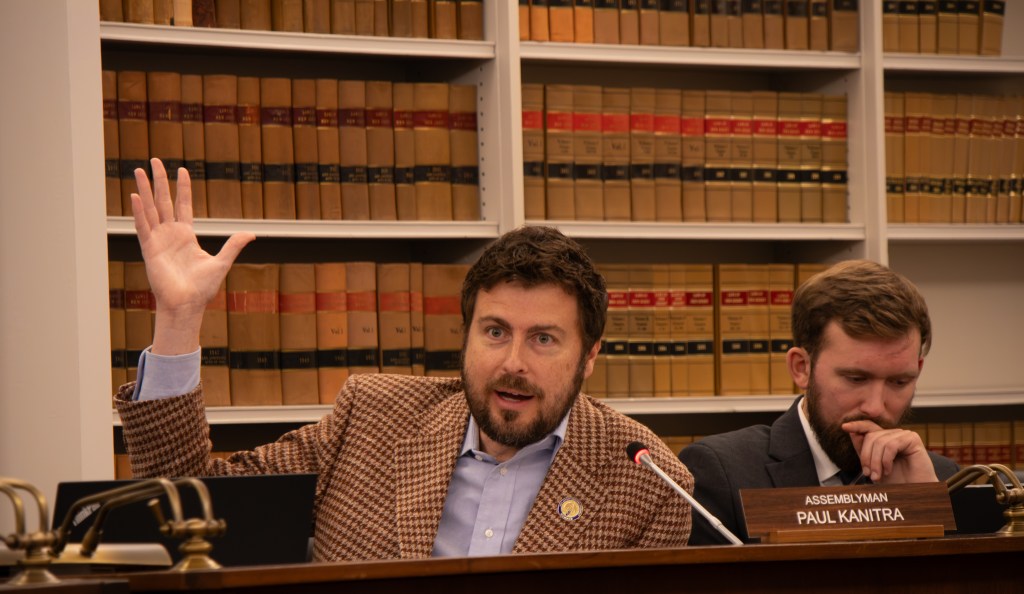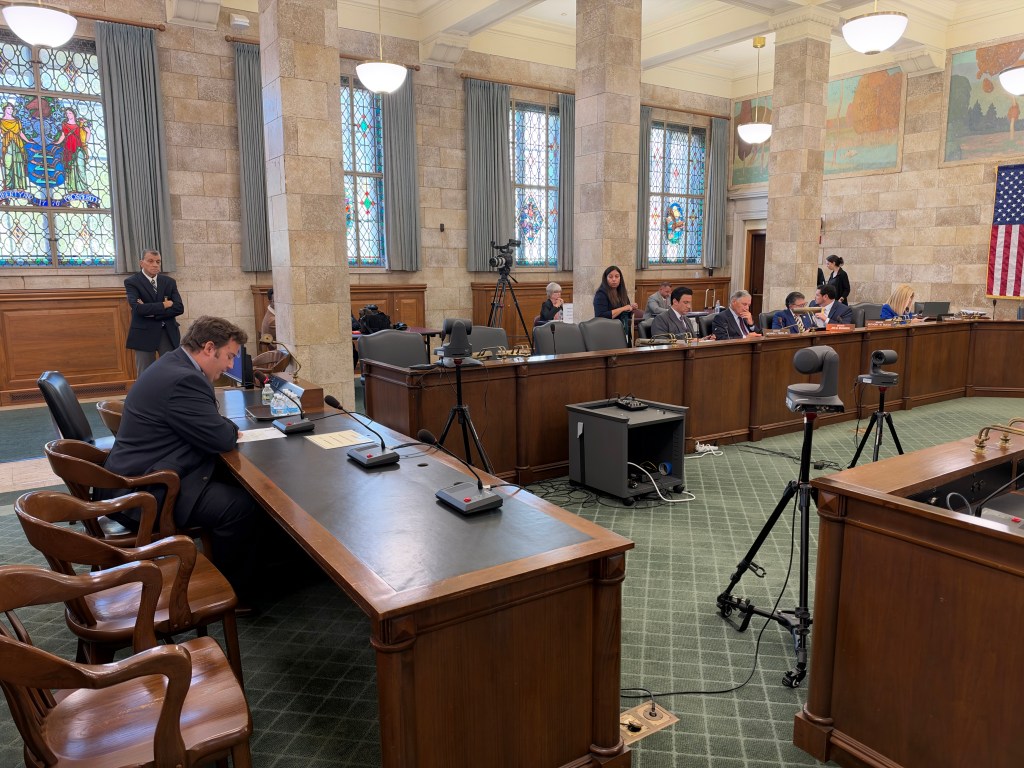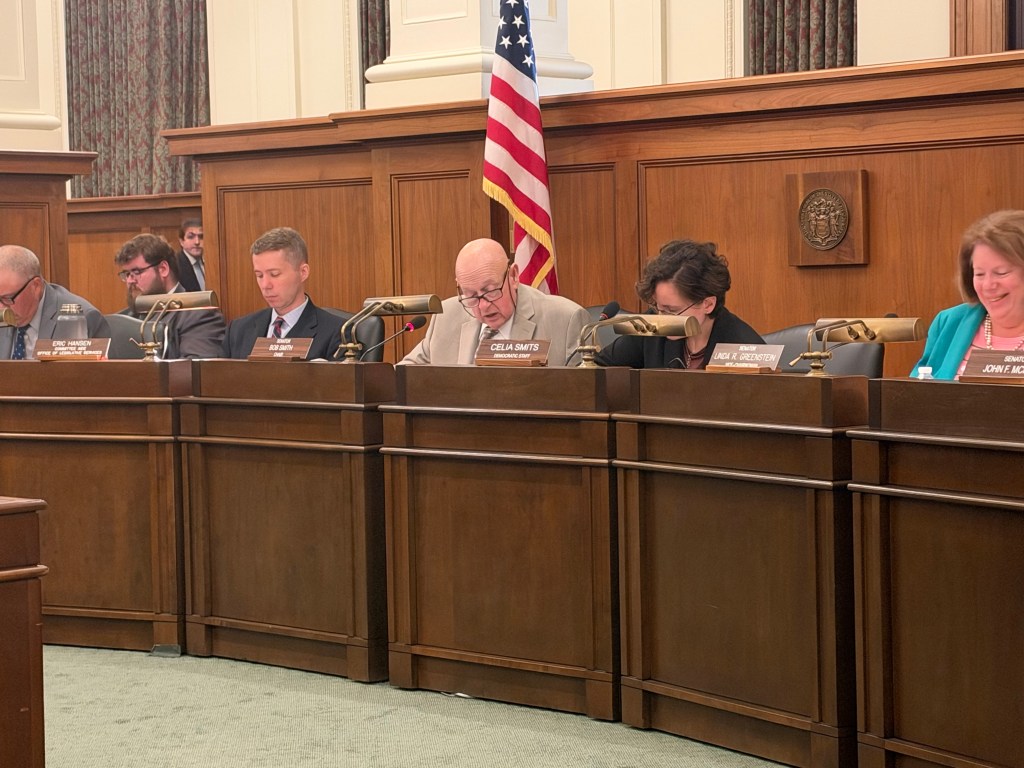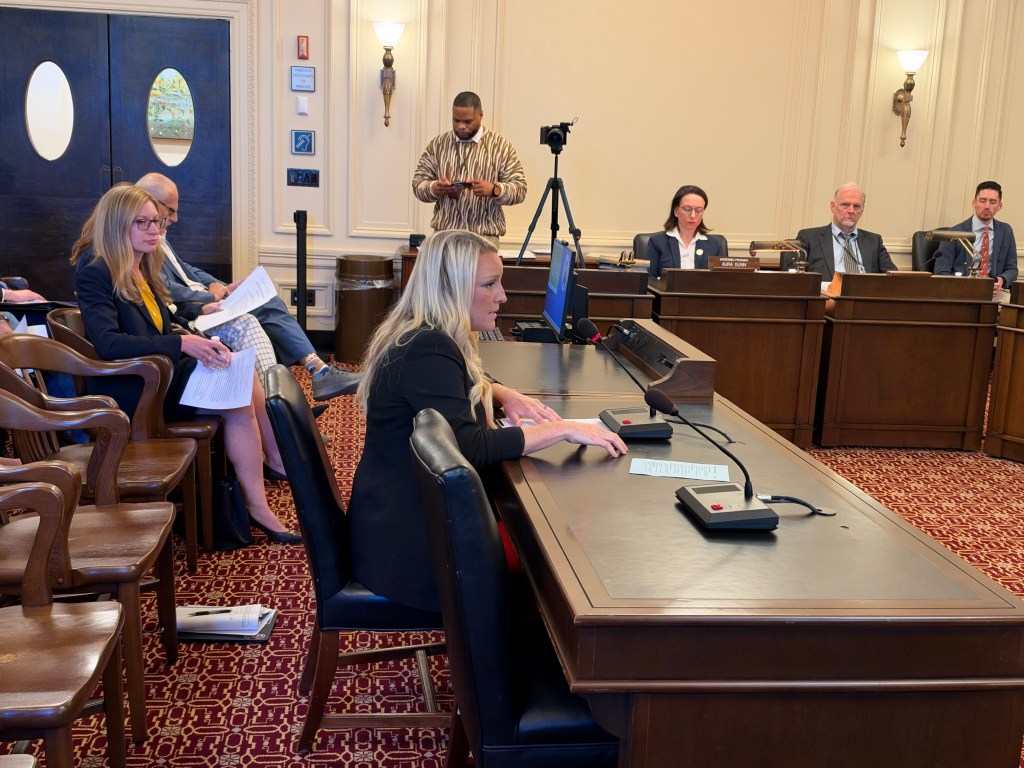
Director of Title IX and Chair of New Jersey Campus Sexual Assault Commission Katherine McGee testifies in favor of several bills during Assembly Higher Education Committee hearing. Photo by Shohini Mitra/NJ State House News Service.
By Shohini Mitra
NJ State House News Service
TRENTON, N.J. – Following national attention surrounding an alleged gang rape at Cornell University, the Assembly Higher Education Committee moved six bills aimed at preventing sexual violence on New Jersey college and university campuses on Thursday.
The measures include a proposed $10,000 fine against colleges and universities that fail to appropriately respond to and investigate student allegations of sexual assault, and clarify that victim incapacitation through voluntary use of drugs or alcohol does not bar prosecution of the assailant.
Five of the bills were filed this month, after a former Cornell student sued the university and seven fraternity brothers alleging she was gang raped in 2024 after being coerced to take drugs. Local prosecutors in New York did not charge any of those accused, and the woman subsequently left the school.
“No student should have to choose between continuing their education and protecting their wellbeing,” said Assembly Member Carmen Theresa Morales, a Democrat from Belleville who chairs the committee. “The deeply troubling allegations at higher education institutions reinforce the urgency of this work.”
The hearing Thursday focused on the safety and well-being of students on higher education campuses.
“It takes extraordinary courage to come forward and often, students don’t do it for themselves. They often don’t report for themselves. They speak up because they want other survivors to know they are not alone,” said Katherine McGee, chair of New Jersey Campus Sexual Assault Commission.
While all of the witnesses were in support of the bills’ intentions, some wondered if the measures had enough clarity and substance to be effectively enacted.
David Rousseau of the Independent Colleges and Universities of New Jersey, voiced concerns regarding multiple oversights in language and ambiguity in A3091.
“One of my requests is to provide a little more meat to the bill,” Russo said. He suggested adding criteria the secretary of education would use to determine if a school failed to appropriately respond, investigate allegations and impose adequate discipline against perpetrators.
The hearing also addressed the type of law enforcement handling the bill’s provisions, because some campuses have their own sworn law enforcement officers and others rely on local police for criminal investigations.

The following bills were moved during the hearing Thursday:
- A3091: Would require New Jersey colleges and universities to pay a $10,000 fine if they fail to appropriately respond to and investigate a student’s allegation of sexual assault by another student. If the allegation is supported by evidence, the institution would also have to take appropriate disciplinary action against the perpetrator. The bill was released with amendments with one abstention from Assembly Member Gerry Scharfenberger, a Republican from Middletown.
- A5639: Would clarify that a sexual assault victim’s voluntary consumption of drugs or alcohol does not prevent prosecution of an alleged perpetrator. The bill would remove language from state law defining mental incapacitation that could create ambiguity about whether prior knowledge or consent affects prosecution. The bill was unanimously released from committee.
- A5597: Would require the secretary of education to establish climate surveys to assess students’ experiences with sexual assault and misconduct in all New Jersey universities and colleges at least once every four years. The survey would collect data on sexual violence, institutional responses, student and bystander attitudes, victims’ physical and mental health needs and students’ awareness of support resources. The bill was unanimously released from committee.
- A5598: Would expand the duties of New Jersey’s Campus Sexual Assault Commission and require state and college officials to designate campus safety liaisons. The commission would help colleges implement campus climate surveys, facilitate communication with community organizations, provide technical assistance through webinars and maintain an online repository of resources for preventing and responding to campus sexual assault and violence. The bill was unanimously released with amendments.
- A5599: Would require New Jersey’s Campus Sexual Assault Commission to host educational events, including an annual statewide conference. It would also call for the Office of the Secretary of Higher Education to strengthen collaboration among colleges, government agencies and community organizations and create an online resource center with sexual assault prevention resources, best practices and campus climate survey findings. The bill was unanimously released from committee.
- A5640: Would require four-year colleges to provide annual training on affirmative consent, sexual violence prevention and Title IX reporting procedures to incoming first year and transfer students. Title IX is the federal law that prohibits gender discrimination, including sexual assault, at colleges and universities. Schools would also need to regularly review and update the training. The bill was unanimously released from committee.
“We can not ask students and survivors to carry that weight alone,” said McGee. “Their courage must be met with statewide commitment, meaningful resources, and institutions that are ready to listen and respond.”
Shohini Mitra is a senior journalism and media studies student pursuing a minor in digital communication, information, and media at Rutgers University.